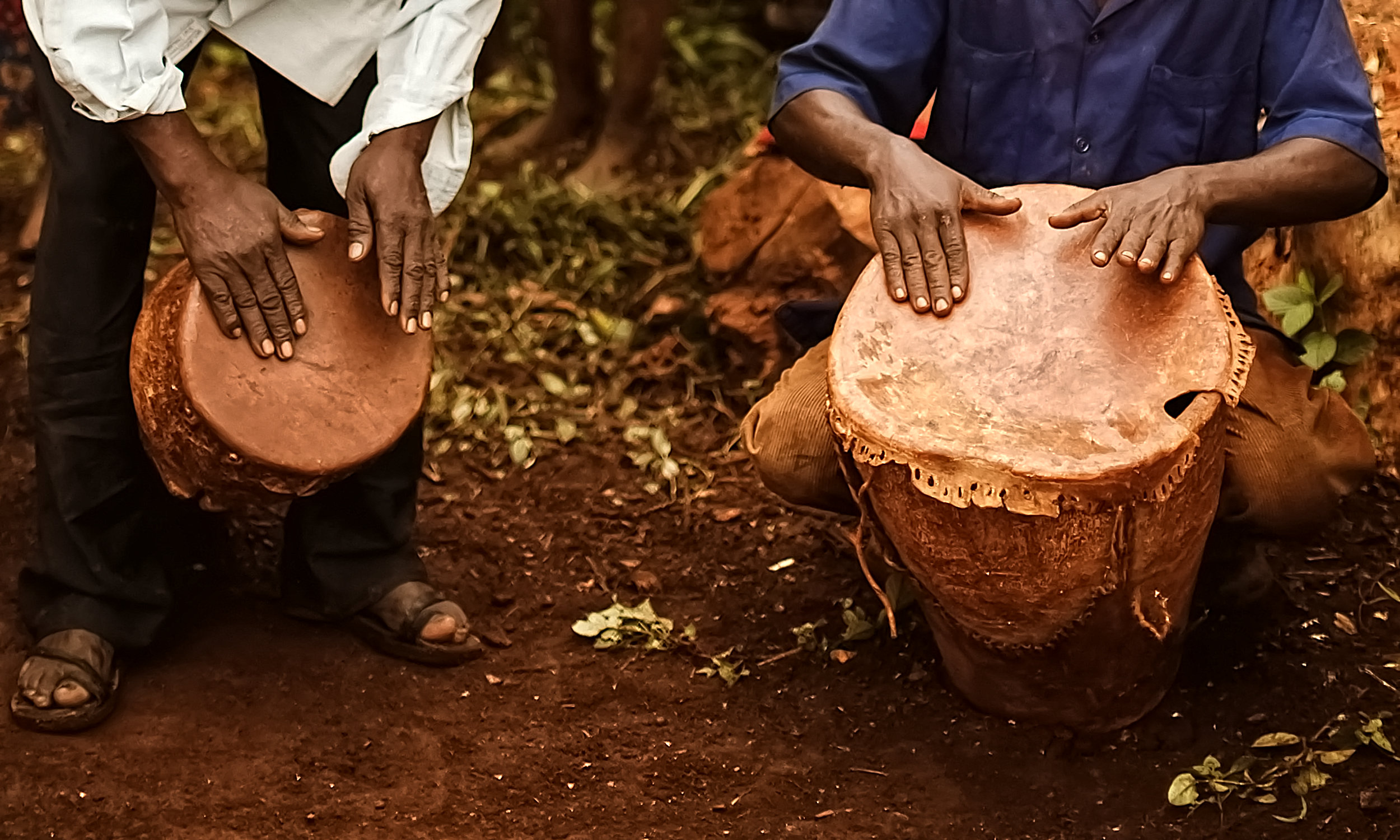

heartbeat of uganda
Ancient Kingdoms, Living Traditions & Local Communities
Explore the Roots of A Rich Cultural Heritage
Uganda’s soul lives in the rhythm of ancient drums, the wisdom of royal courts, and the warmth of village fires. Here, every sunrise illuminates stories thousands of years in the making.
Step off the plane in Entebbe and you’re entering a country where history walks alongside you on dusty roads, where ancient rhythms echo through modern cities, and where every conversation might reveal another layer of one of Africa’s most complex cultural tapestries. Uganda lives it’s vibrant culture, and invites you to become part of its ongoing story.
The Deep Roots: How Uganda Became Uganda
Long before maps drew lines across Africa, this fertile land pulsed with the heartbeat of mighty kingdoms. Four hundred years ago, travelers would have found the Buganda Kingdom flourishing around Lake Victoria’s shores: a sophisticated civilization where the kabaka ruled as both earthly king and spiritual guardian. Court musicians played intricate melodies on royal drums, while skilled craftsmen created bark cloth fit for ceremonies that connected the living with their ancestors.
The Bunyoro-Kitara Kingdom stretched its influence from present-day Uganda deep into Congo, Rwanda, and Tanzania. Their omukama commanded trade routes that brought salt from distant lakes, iron from skilled forges, and stories from lands beyond the horizon. This was conquest and cultural exchange on a grand scale, where ideas about governance, spirituality, and art flowed along ancient pathways.
In the southwestern highlands, the Ankole Kingdom built its entire civilization around cattle. But these weren’t ordinary livestock: the magnificent long-horned Ankole cattle became living symbols of wealth, beauty, and spiritual connection. Kings measured their power in herds, poets composed verses about their grace, and artists carved their elegant forms into everything from stools to ceremonial vessels.
Christianity arrived in Uganda during the 1870s, creating the martyrs whose deaths at Namugongo became foundational to Ugandan Christian identity. Islam came earlier through Arab trade networks, establishing communities particularly strong in eastern Uganda. But traditional African religions didn’t disappear – instead, they often merged with introduced faiths, creating syncretic practices that honor ancestors while embracing new spiritual frameworks.
When British colonizers arrived in 1894, they found political systems so sophisticated they chose to rule through them rather than replace them entirely. This “indirect rule” created the fascinating dual authority that defines Uganda until today: elected officials governing alongside traditional kings who retain deep cultural influence over their people.
The colonial period brought English language and administrative systems, but it couldn’t erase the deeper cultural DNA that had evolved over centuries. Independence in 1962 marked the beginning of a complex dance between traditional and modern authority that continues today. When Milton Obote tried to abolish kingdoms in 1966, they went underground but never disappeared. Even Idi Amin’s reign of terror from 1971-1979 couldn’t destroy what lived in people’s hearts and memories.
The restoration of cultural institutions in 1993 under President Museveni felt like a cultural renaissance to many. Suddenly, kingdoms that had survived in whispers could celebrate openly again. Traditional ceremonies returned to public spaces, royal courts resumed their cultural functions, and elders began passing down knowledge they had guarded carefully during darker times.
Today’s Uganda carries all these layers, each period adding richness without erasing what came before. You’ll meet university professors who still bow to traditional kings, businesspeople who consult ancestral spirits before major decisions, and young people who navigate confidently between village customs and global culture.
A Kaleidoscope of Tribes and Languages
Walk through any Ugandan market and you’ll hear the music of over fifty languages, each one carrying the wisdom and worldview of distinct communities. More than just linguistic diversity, it’s a cultural wealth that reveals how many different ways humans can organize society, understand spirituality, and create beauty.
The Bantu-speaking peoples dominate Uganda’s southern and central regions like master weavers working with different colored threads. The Baganda, the country’s largest ethnic group, developed political systems so sophisticated that their parliament, the Lukiiko, influenced British colonial administration. Their language, Luganda, flows like honey through central Uganda, serving as a bridge between communities. Baganda culture gave the world bark cloth – one of humanity’s oldest textiles – and architectural styles featuring distinctive peaked roofs that seem to reach toward heaven.
Travel southwest and you’ll encounter the Banyankole, whose entire civilization revolved around cattle culture. Their society divided between the Bahima pastoralists and Bairu agriculturalists, creating complex social relationships that influenced everything from marriage customs to artistic expression. The Bakiga, highland farmers who carved terraced gardens from steep mountainsides, developed musical traditions featuring the haunting melodies of traditional harps that echo across valleys like voices of the ancestors.
The Batooro maintain one of Uganda’s most vibrant traditional kingdoms, where the omukama still plays active roles in cultural life. Their capital, Fort Portal, blends royal heritage with modern administration in ways that feel seamless rather than contradictory. Batooro architecture, with its grass-thatched houses and decorative elements, influences contemporary building designs throughout western Uganda.
Eastern Uganda introduces you to the Basoga, whose traditional federation of chieftaincies created unique political structures based on consensus and shared authority. The Bagisu are famous throughout East Africa for their biennial circumcision ceremonies – community celebrations so elaborate they transform entire districts for months, bringing together extended families, traditional authorities, and modern institutions in spectacular displays of cultural continuity.
Northern Uganda opens completely different cultural windows. Here, Nilotic peoples like the Acholi developed societies based on different principles entirely. Their traditional justice system, mato oput, focuses on reconciliation and community healing rather than punishment – wisdom that proved crucial during post-conflict reconstruction. Acholi oral poetry preserves historical memories with precision that rivals written records, while their dance traditions express warrior heritage through movements that tell stories of courage, loss, and survival.
The Langi created agricultural systems perfectly adapted to semi-arid conditions, developing drought-resistant crops and water management techniques that modern development experts study with admiration. Their age-set systems organize community life around shared responsibilities and mutual support that create security networks stronger than individual wealth.
In the northeast, the Karamojong represent one of Africa’s last purely pastoralist cultures. Their entire worldview centers on cattle – not just as economic assets but as spiritual intermediaries, markers of social status, and artistic inspiration. Karamojong age-sets move young men through elaborate stages from childhood to warrior status to elderhood, each transition marked by ceremonies that reinforce community bonds and cultural knowledge. Their artistic traditions – body painting, beadwork, and oral poetry – carry meanings that outsiders can appreciate aesthetically but rarely fully understand culturally.
Each language represents a complete way of seeing the world. Lusoga incorporates political concepts reflecting the decentralized authority of Busoga region. Runyoro contains specialized vocabulary for royal protocols and cattle management that don’t exist in agricultural languages. Luo languages use tonal variations that change meaning through pitch, making their poetry and storytelling traditions particularly rich and complex.
Kampala’s Cultural Crossroads: Where Past and Present Collide
Uganda’s capital city serves as a living museum where you can experience the full spectrum of the country’s cultural evolution in a single day. Start at the Kabaka’s Palace in Lubiri Mengo, where traditional Baganda authority operates within modern Uganda’s democratic framework. The current palace, rebuilt after Idi Amin’s destruction of the original, represents more than architectural restoration and became a statement about cultural resilience and the power of community commitment to preserve what matters most.
The palace grounds tell stories through their very layout. Traditional courtyards designed for community gatherings, ceremonial spaces that connect earthly authority with spiritual realms, and architectural details that encode cultural values in wood, reed, and iron. Your guide will share tales of past kabakas – their wisdom, their struggles with colonial authorities, and how the monarchy adapted to survive in a rapidly changing world while maintaining its essential character.
The nearby Kasubi Royal Tombs represent the spiritual heart of Baganda culture, housing the remains of four kabakas in structures built entirely from traditional materials using techniques passed down through countless generations. When fire damaged the main building in 2010, the community response revealed how deeply these traditions remain embedded in contemporary life. Thousands of people contributed labor, materials, and expertise to the reconstruction, which strictly follows traditional methods and materials to ensure cultural authenticity.
For architectural contrast, visit the Uganda National Mosque, whose towering minaret dominates Kampala’s skyline like a spiritual lighthouse. Built with Libyan funding, this impressive structure represents Uganda’s Islamic community and the country’s connections to broader African and Middle Eastern cultural networks. The mosque’s design philosophy incorporates both Islamic architectural principles and African aesthetic elements, creating something that feels both universal and uniquely Ugandan.
The Bahá’í Temple offers yet another perspective on spiritual architecture. One of only eight continental Bahá’í houses of worship worldwide, its peaceful gardens and distinctive design create contemplative space that transcends religious boundaries. The temple’s architectural philosophy – incorporating local elements while serving universal spiritual purposes – mirrors Uganda’s broader approach to cultural synthesis.
At the Uganda Museum, ethnographic collections preserve and display material culture from across the country’s diverse communities. Traditional musical instruments reveal the sophistication of indigenous music systems that used pentatonic scales, complex rhythmic patterns, and instrumental techniques that influenced contemporary East African music. Archaeological displays connect today’s cultures to their ancient roots, while the famous bark cloth collection showcases textile traditions that UNESCO recognized as masterpieces of oral and intangible heritage.
The former Idi Amin torture chambers provide necessary counterpoint to these celebrations of culture: sobering reminders that political violence shaped modern Uganda in ways that visitors need to understand. These sites exist not for shock value but to ensure that lessons learned from tyranny inform contemporary democratic commitments and cultural preservation efforts.
The Rhythm of Celebration: Festivals That Define Community
Uganda’s festival calendar reveals the deep rhythms that organize community life and provide authentic windows into living culture. They’re genuine expressions of values, beliefs, and social relationships that define Ugandan identity.
The Bagisu circumcision ceremonies during even-numbered years transform entire communities in eastern Uganda into stages for one of Africa’s most elaborate rites of passage. Young men preparing for initiation become community focal points for weeks of preparation involving traditional music, ceremonial dancing, and elaborate feasting. Families invest enormous resources – not just money but time, energy, and social connections – to ensure proper celebrations. Extended relatives travel from across the country, traditional authorities play central roles in blessing and guidance, and entire villages reorganize their schedules around ceremony requirements.
These aren’t just individual transitions to manhood but community celebrations of cultural continuity, identity preservation, and intergenerational knowledge transfer. The ceremonies demonstrate how traditional practices adapt to contemporary realities while maintaining their essential spiritual and social functions.
Martyrs’ Day on June 3rd brings Uganda to a virtual standstill as millions of pilgrims converge on Namugongo, where 26 Christian converts were executed in 1886 for refusing to renounce their faith under Kabaka Mwanga’s orders. This massive gathering has become a national cultural expression that brings together Catholics, Anglicans, Pentecostals, and other denominations in shared commemoration of faith and courage.
The pilgrimage itself has become cultural tradition. People walk hundreds of kilometers from across East Africa, carrying crosses, singing hymns, and stopping at shrines along the way. Communities along pilgrimage routes provide food, water, and shelter, creating networks of hospitality that demonstrate Ubuntu philosophy in action. The main celebration features masses in multiple languages, traditional music performances, and cultural displays that showcase Uganda’s religious diversity.
Independence Day on October 9th transforms into spectacular showcases of cultural diversity through performances representing different regions and ethnic groups. Military parades combine with traditional dance competitions, creating events that demonstrate both national unity and cultural distinctiveness. Regional governments organize cultural weeks featuring local music, crafts, and culinary traditions, allowing visitors to experience authentic expressions of local identity concentrated into accessible formats.
Christmas and Easter involve massive internal migrations as urban workers return to rural ancestral homes, creating opportunities to experience authentic family celebrations while making transportation and accommodation challenging for travelers. These movements reveal the continuing strength of extended family networks and rural connections even among highly urbanized populations.
Islamic holidays like Eid ul-Fitr and Eid ul-Adha see similar patterns in areas with significant Muslim populations, particularly eastern regions where Islamic culture has deeper historical roots. These celebrations involve community prayers, elaborate feasting, and gift-giving traditions that strengthen social bonds and demonstrate Islamic values of charity and community support.
Harvest festivals vary by region and agricultural cycle but generally involve thanksgiving ceremonies, traditional music competitions, and community feasting that celebrate successful farming seasons while honoring spiritual forces believed to influence agricultural productivity. Coffee regions hold harvest festivals that combine agricultural celebration with cultural performance, creating events that attract both local participants and international visitors interested in coffee culture.
Wedding seasons, traditionally falling during dry months when travel is easier and agricultural work lighter, create opportunities to witness elaborate ceremonies that demonstrate family wealth, cultural knowledge, and community networks. Traditional wedding preparations involve months of planning, complex negotiations between families, and ceremonies that can extend over several days with different events highlighting various aspects of cultural tradition.
Sacred Sites and Royal Legacies Beyond the Capital
The Naggalabi Buddo Coronation Site, just 15 kilometers from Kampala, serves as the sacred location where Baganda kings have received their crowns for centuries. The site includes ancient sacred groves where spiritual ceremonies prepare future kabakas for leadership, traditional structures that play crucial roles in royal protocols, and ritual spaces that connect earthly authority with ancestral blessings.
Standing here connects you to political and spiritual authority systems that have defined Buganda leadership for over 600 years. The ceremonies performed here aren’t just political installations but spiritual transformations that create living links between communities and their cultural heritage.
Western Uganda’s Igongo Cultural Centre provides comprehensive introductions to Ankole culture, where cattle represented far more than livestock: they were spiritual intermediaries, symbols of beauty and wealth, and centers of social organization that influenced everything from marriage negotiations to artistic expression. The center’s displays explain complex cattle management systems that created sustainable pastoralism, traditional housing designed specifically for pastoralist lifestyles, and artistic traditions that celebrated the grace and significance of long-horned Ankole cattle.
The Mparo Tombs represent royal burial grounds of the Bunyoro kingdom, connecting contemporary visitors to the semi-mythical Bachwezi dynasty whose influence permeates regional folklore and spiritual beliefs throughout western Uganda. These sites function as more than historical monuments: they remain active spiritual centers where traditional ceremonies continue, demonstrating the ongoing relevance of ancient authority structures in contemporary community life.
Eastern Uganda’s Nyero Rock Paintings offer mysterious connections to prehistoric communities whose artistic expressions remain partially undeciphered despite decades of archaeological study. The geometric patterns, human figures, and symbolic designs painted on granite outcrops centuries ago continue to spark scholarly debate about their meanings – astronomical observations, spiritual maps, social organization charts, or artistic expressions whose purposes we may never fully understand.
These ancient artworks remind visitors that Uganda’s human history extends far beyond written records or oral traditions into deep prehistoric connections between humans and landscape that created some of Africa’s earliest artistic expressions.
When the Drums Tell Stories: Melodies That Bridge Centuries
The Ndere Troupe represents Uganda’s premier cultural performing arts organization, bringing together traditional music and dance from across the country’s diverse communities in spectacular shows that function as cultural education rather than mere entertainment. Their performances provide intensive introductions to regional variations in musical instruments, dance styles, and storytelling traditions that visitors might not experience otherwise.
Watching Ndere perform takes you on journeys across Uganda’s cultural landscape. Graceful Kiganda dances that once entertained royal courts demonstrate sophisticated choreography and musical complexity. Energetic Acholi war dances express warrior heritage through movements that tell stories of courage, conflict, and community survival. Traditional music from Karamojong communities incorporates vocal techniques and instrumental accompaniments adapted to pastoralist life, often performed around cattle enclosures during important community gatherings.
Traditional music varies dramatically across regions and ethnic groups, reflecting different social organizations, spiritual beliefs, and environmental adaptations. Buganda court music features complex rhythmic patterns played on royal drums, amadinda xylophones, and traditional string instruments that accompany elaborate dances performed during important ceremonies. The music encodes historical information, genealogical records, and cultural values in melodies and rhythms passed down through specialized musical families.
Acholi music incorporates call-and-response patterns that mirror their democratic decision-making processes, where community members participate actively in both musical and political expressions. Their traditional songs preserve historical memories of migration, conflict, heroes, and cultural wisdom with accuracy that rivals written historical records.
Contemporary Ugandan music demonstrates how traditional elements blend with modern influences to create unique sounds that reflect ongoing cultural synthesis throughout society. Musicians like Juliana Kanyomozi incorporate traditional rhythms and instruments into contemporary compositions, while politically conscious artists like Bobi Wine use music for social commentary that draws on indigenous protest and praise traditions.
Forest Wisdom: The Batwa Cultural Heritage
The Batwa Cultural Trail Experience in southwestern Uganda offers encounters with one of Africa’s oldest indigenous cultures – forest people whose sophisticated ecological knowledge developed over thousands of years of symbiotic relationship with their environment. Once living as hunter-gatherers in forests that became Bwindi Impenetrable and Mgahinga National Parks, the Batwa were displaced by conservation efforts but maintain cultural practices and environmental knowledge that remain invaluable.
Walking forest paths with Batwa guides reveals encyclopedic understanding of ecosystem relationships that surpasses academic forestry training. They demonstrate plant identification techniques that distinguish between dozens of similar-looking species, animal tracking methods that read forest floors like open books, fire-making skills that use only forest materials, and shelter construction techniques that provide comfort while leaving minimal environmental impact.
Their traditional pharmacological knowledge includes medicinal applications for hundreds of forest plants, preparation techniques that maximize therapeutic benefits, and diagnostic methods that identify health problems through observation skills developed over generations. This isn’t primitive medicine but sophisticated healthcare adapted perfectly to forest environments and available resources.
The Batwa spiritual relationship with forest environments encompasses complex understanding of seasonal patterns, animal behavior, plant lifecycles, and ecological relationships that guided sustainable resource use for millennia. Their oral traditions preserve detailed environmental knowledge encoded in stories, songs, and ceremonies that served as educational curricula for forest survival and environmental stewardship.
Contemporary Batwa communities navigate between traditional ecological knowledge and modern economic requirements, often working as cultural educators, guides, and craftspeople while maintaining spiritual connections to forest environments. Their pottery traditions, basket weaving, and traditional medicine practices provide income while preserving cultural heritage for future generations.
Heartbeats of the Countryside: Where Life Unfolds in Simple Grace
Some of the most profound cultural encounters happen through authentic village experiences that many lodges and tour operators facilitate carefully. These visits connect travelers with families engaged in ordinary daily life, providing insights into contemporary rural culture that formal attractions cannot match.
Imagine joining a family that supplies dairy products to your accommodation. You’ll observe how traditional cattle management techniques integrate with modern market demands, learn about gender roles in rural households that balance traditional expectations with contemporary economic realities, and understand how extended family networks provide security, support, and social organization that individual achievement cannot replace.
These encounters reveal values that guide daily life throughout rural Uganda: the importance of consensus in community decision-making processes, the central role of elders in conflict resolution and wisdom transmission, the integration of spiritual practices with practical activities, and the sophisticated environmental knowledge that guides agricultural and pastoral practices developed over centuries.
Village visits often include opportunities to participate in daily activities – preparing traditional meals, learning handicraft techniques, observing agricultural practices, or joining community meetings where you can witness democratic processes that blend traditional and modern governance approaches.
Children in these settings often serve as cultural bridges, eager to practice English while teaching visitors words and phrases in local languages. Their drawings, games, and daily routines reveal how contemporary rural childhood balances traditional cultural education with modern school curricula and global media influences.
Markets and Artisans: A Way to Take the Culture of Uganda Home With You
Look beyond commercial transactions in the markets to observe social interactions that reveal cultural values. Notice how disputes get resolved through community mediation rather than individual confrontation. Watch how vendors share meals, child care responsibilities, and business advice in networks of mutual support that create security more reliable than individual wealth accumulation.
Traditional crafts available in markets carry deep cultural meanings that transform simple purchases into cultural exchanges.
Bark cloth production in Buganda represents one of humanity’s oldest textile traditions, involving complex processes that transform fig tree bark into fabric suitable for ceremonial use, clothing, and artistic expression. Each stage requires specific knowledge and techniques passed down through family lines over hundreds of generations.
Basket weaving varies dramatically by region and intended purpose, with distinct patterns and techniques that immediately identify their cultural origins to knowledgeable observers. Karamojong baskets feature geometric patterns with spiritual significance related to cattle brands and clan identification. Baganda baskets emphasize functionality and aesthetic appeal, often incorporating natural dyes that create subtle color variations.
Traditional musical instrument construction preserves ancient knowledge about sound production, wood selection, spiritual preparation of materials, and construction techniques that create instruments capable of producing the complex tonal variations required for traditional music. Buying authentic instruments connects you to musical traditions while supporting craftspeople who maintain these specialized skills.
When purchasing cultural artifacts, seek items with authentic cultural significance rather than mass-produced souvenirs manufactured for tourist consumption. Direct purchases from artisans support cultural preservation and economic empowerment while ensuring authenticity and cultural appropriateness of your acquisitions.
Stories That Unlock Hearts: Your Sneak Peak Before the Travel
Sometimes the best way to fall in love with a place starts long before you pack your bags. Curl up with a book or settle in for a film, and suddenly Uganda begins to reveal itself in ways that no guidebook can capture. Think of them as secret doors into understanding why people laugh the way they do, why certain conversations grow quiet, and why a simple gesture can carry the weight of centuries.
Jennifer Nansubuga Makumbi writes like someone sharing family secrets over tea. Her novels pull you into the messy, beautiful reality of modern Ugandan women navigating between what their grandmothers expected and what the world now offers. Read her work and you’ll start recognizing the subtle negotiations happening in every conversation – how people honor tradition while carving out space for their own dreams.
Moses Isegawa’s “Abyssinian Chronicles” reads like sitting with an elder who’s lived through everything and isn’t afraid to tell the truth. His sprawling story of post-independence Uganda doesn’t sugarcoat the chaos, but it shows you something profound: how ordinary people find ways to keep their humanity intact when the world goes mad around them. You’ll understand why Ugandans have this particular kind of resilience, this ability to laugh even when things are hard.
“The Last King of Scotland” might be the film most people know, but take it as one dramatic perspective rather than documentary truth. Still, it opens questions about power, loyalty, and survival that echo through Ugandan history and help you understand why political conversations can turn complex so quickly.
The real magic happens when these stories start connecting with what you see around you. That moment when you recognize the family dynamics from a novel playing out at your breakfast table, or when you understand the historical weight behind a casual comment. Suddenly, you’re not just visiting Uganda – you’re beginning to read its deeper rhythms.
Where Every Goodbye Becomes a Promise to Return
Every interaction offers cultural learning opportunities if approached with genuine curiosity and respectful attention. The ways people greet each other encode social hierarchies and relationship recognition. Meal sharing demonstrates hospitality values and social bonding practices. Conflict resolution reveals community-oriented approaches to justice and harmony. Celebration styles reflect collective joy and cultural continuity.
You’ll witness this cultural synthesis everywhere: in urban neighborhoods where traditional music influences contemporary compositions, in rural areas where ancient farming techniques incorporate modern technology without losing their environmental wisdom, in conversations that bridge generational perspectives while maintaining respect for elder knowledge, and in religious practices that honor ancestors within Christian or Islamic frameworks.
Understanding these cultural connections enhances every aspect of your Uganda experience, from wildlife encounters that gain deeper meaning through traditional conservation beliefs, to landscape appreciation enriched by spiritual relationships with natural features, to culinary adventures that reveal cultural values through food preparation and sharing practices.
Come to Uganda ready to engage respectfully with living culture rather than historical museum pieces. Listen more than you speak. Participate appropriately in ongoing cultural conversations. Accept invitations to share in daily life. Show genuine interest in understanding rather than just observing. The cultural experience will transform not just your knowledge of Uganda but your understanding of community, tradition, heritage, and what it means to live with cultural depth and meaning in an interconnected world.