
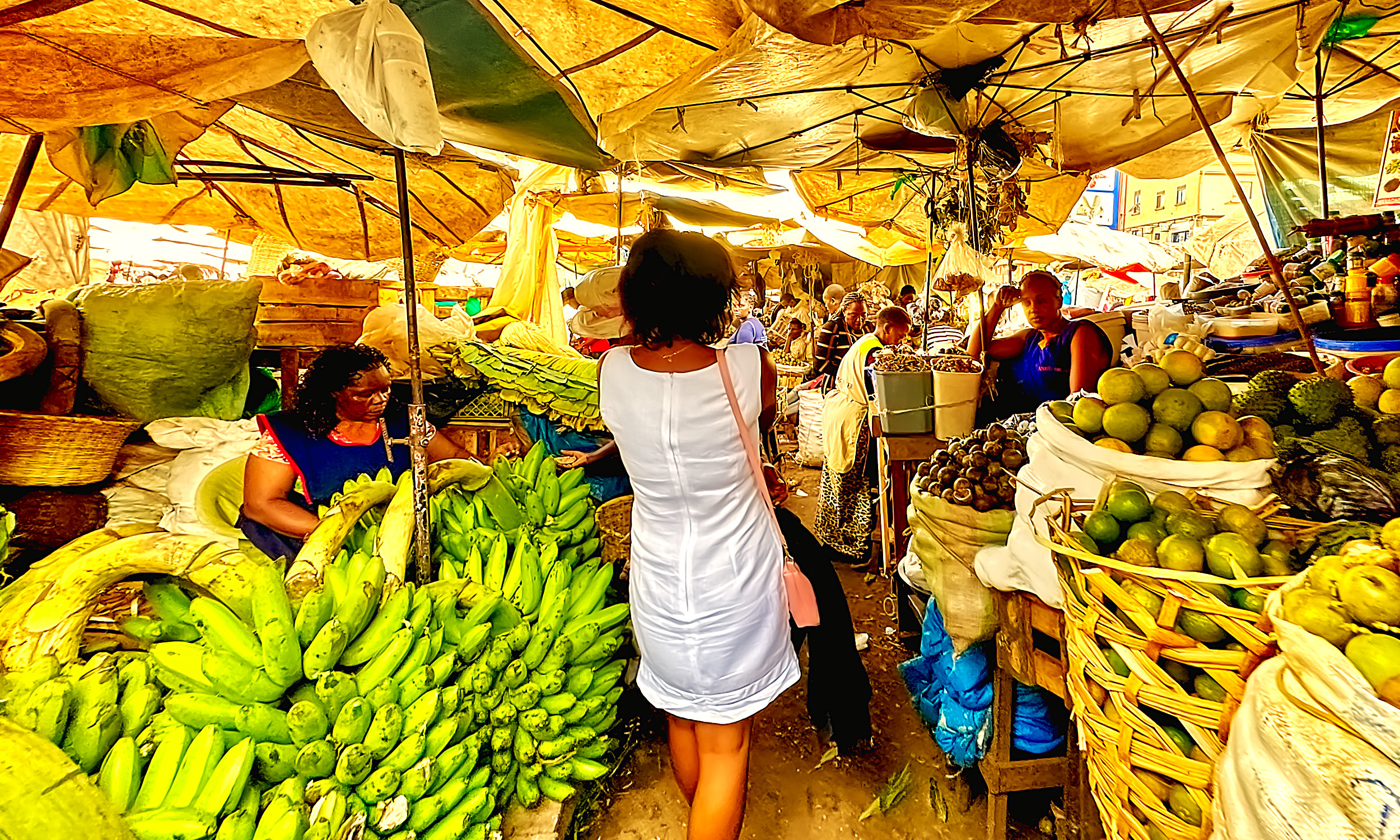
Why Nakasero Market belongs on your Kampala itinerary
This isn’t a tourist attraction – it’s daily life. If you come here with curiosity, you’ll walk away with far more than fruit. You’ll carry a sense of place and time.
For fruit lovers, the prices here are unbeatable and quality unmatched. Mangoes are almost dripping with flavor. Bananas melt in your mouth. Passion fruit cuts through like sunshine. And cinnamon or ginger from the spice stalls can flavor your cooking back home.
More than anything, you’ll meet people who live here. Vendors who remember faces, fruits that arrive early, stories traded in passing banter. You’ll hear Luganda and English and feel that this market is inclusive – if you show respect, it responds with stories and generosity.
Why you should go to Nakasero Market
“Loud, fragrant, and full of taste – step straight into the rhythm of Ugandan life”
- Best for: An early morning market adventure, soaking in authentic local culture
- Must try: Taste your way through Nakasero – ask for Luweero pineapple, Masaka passion fruit, and spice up your life with cinnamon bark and other herbs.
- Price range: 2,000–50,000 UGX (€0.50–€10.00)
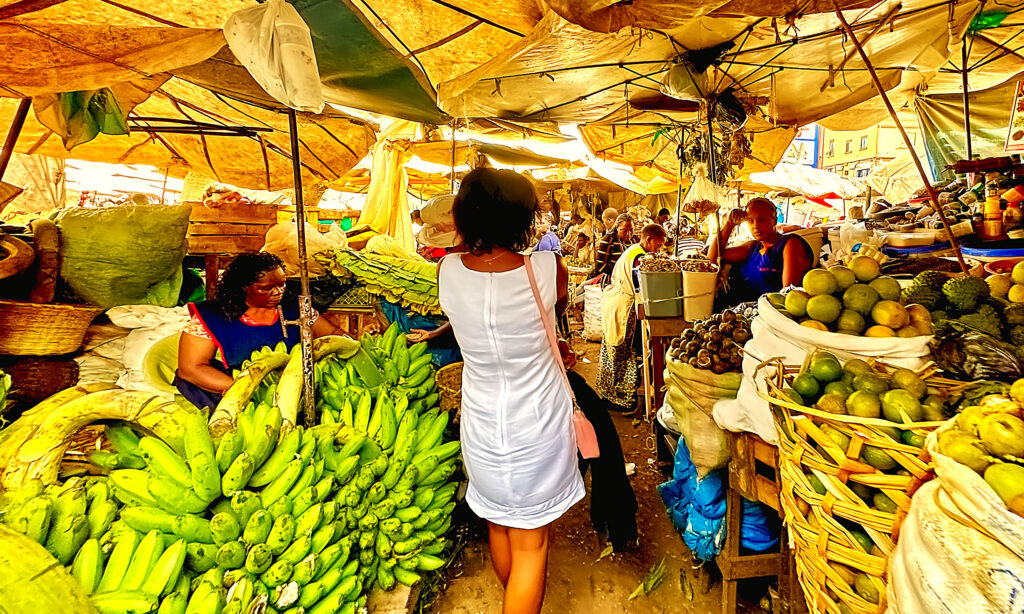
In the early bustle of Nakasero the soul of Kampala speaks out loud
You enter a world of contrast as you approach the base of Nakasero Hill – here the city is shaping up for modern life, though you’ll still find some of the colonial-era building hidden behind large advertisements, with rusting beams and old‑style windows.
We begin early, just after the sun rises. That’s when Kampala’s heartbeat is strongest: crates of fruits arrive from farms, sellers carve generous wedges, haggling begins softly, and the marketplace hums alive with real life unfolding.
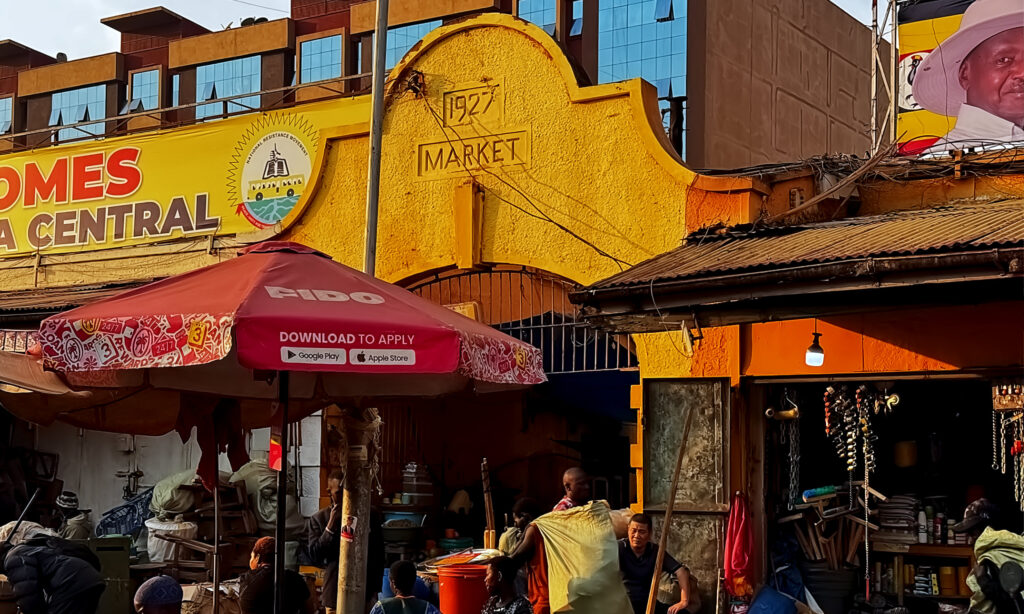
The old market building from 1927 today is home to meat, chicken, and fish vendors. But it’s not where we head – you’ll want to move around Market Street where rows of umbrellas shade heaps of tropical fruit, leafy vegetables, and spice baskets from the sun. It’s here, in the outdoor section, that you’ll get the most colorful and rewarding market experience.
The market’s roots date back to 1895, originally part of the Buganda royal palace grounds. It moved several times before settling into the current location beneath Nakasero Hill. Since those early days, it has remained Kampala’s principal fresh produce market, managed by local trader associations and buzzing every morning with energy.
The smell hits first: ripe mangoes, crushed passion fruit, earthy pineapples, and sometimes a whiff of ginger or the smoky scent of grilled maize from a roadside vendor.
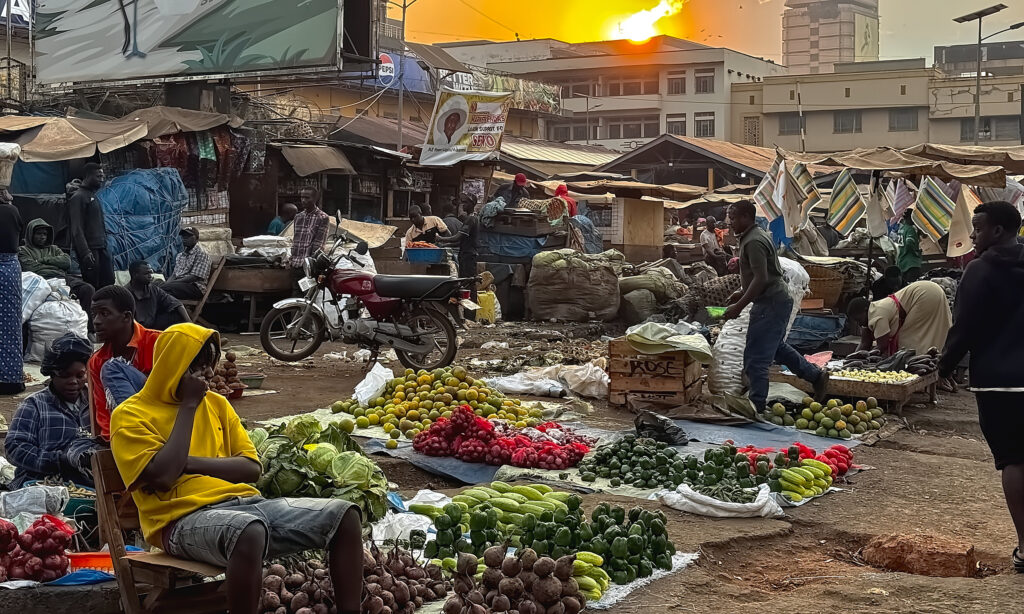
Nakasero Market doesn’t soften reality. There’s no staged decor. There’s dirt on the ground, flies hovering near ginger roots, and the occasional crate sliding off a cart. But there’s also color: bananas in lush green, papayas in warm blush tones, mangoes in sunset orange. There’s taste: succulent pineapple, tangy passion fruit, leafy freshness. It’s loud and busy, but the kind of busy that energizes you. Entering this world you become part of a living, breathing tradition of trade and flavor.
How to pick the juiciest fruit, and what to take home from Nakasero Market
Uganda is a fruit lover’s dream—and locals know it. Across the region, Ugandan fruit is famous for its bold flavor and natural sweetness. Pineapples from Luweero, passion fruits from Masaka, mangoes, jackfruit, and creamy avocados will make you love to eat fruit all day long.
We usually go to Nakasero Market around 8 AM, just after sunrise when the city is waking up. We pass the taxis and enter from the front, heading straight to the shaded area behind the colonial building. There’s something calming about walking between rows of matooke (green bananas), carefully stacked piles of ginger, and the rich earthy smells of Uganda.
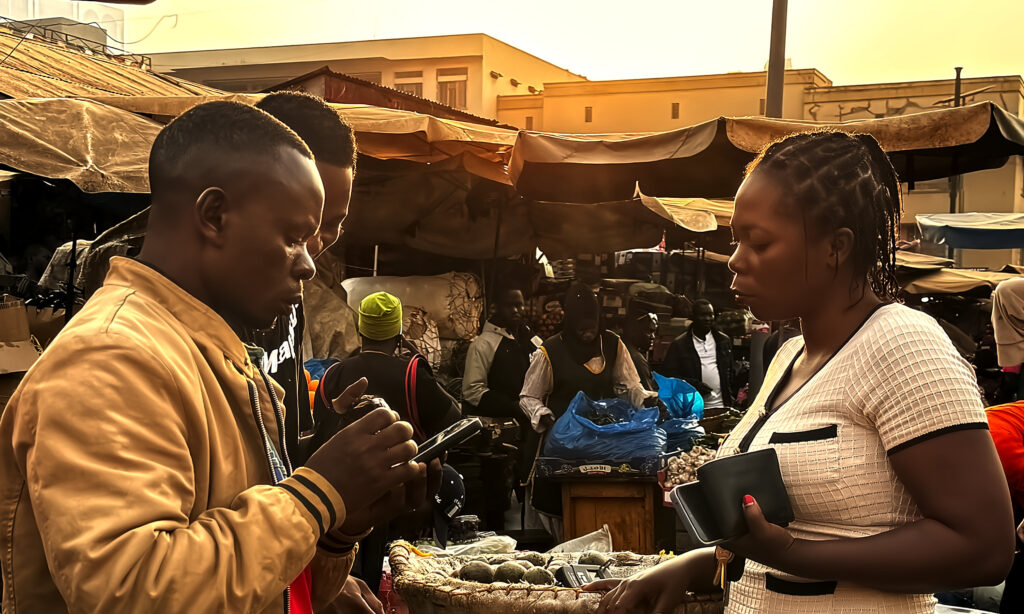
We chat with our usual fruit guy and he opens up a passion fruit to let us try the taste. It’s from Masako, he says with pride. It’s so sweet it feels like syrup. We get a few pineapples, too – Tracy is choosing the best ones, from Luweero obviously, like she is herself, golden and sweet just as they should be.
You’ll find nearly every tropical fruit imaginable, and probably a few you’ve never heard of. Uganda’s fertile soil and equatorial climate mean you can find fruit almost year-round, but the absolute best picks come during and right after the rainy seasons.
If you want to bring something home from Nakasero Market, go for cinnamon bark, dried spices, or fresh vanilla pods—light, aromatic, and perfect as gifts. Passion fruit also travels well thanks to its tough skin. Mangoes and avocados, however, are best enjoyed fresh in Uganda—they bruise easily and don’t last the trip.
You’ll find nearly every tropical fruit imaginable, and probably a few you’ve never heard of. Uganda’s fertile soil and equatorial climate mean you can find fruit almost year-round, but the absolute best picks come during and right after the rainy seasons.
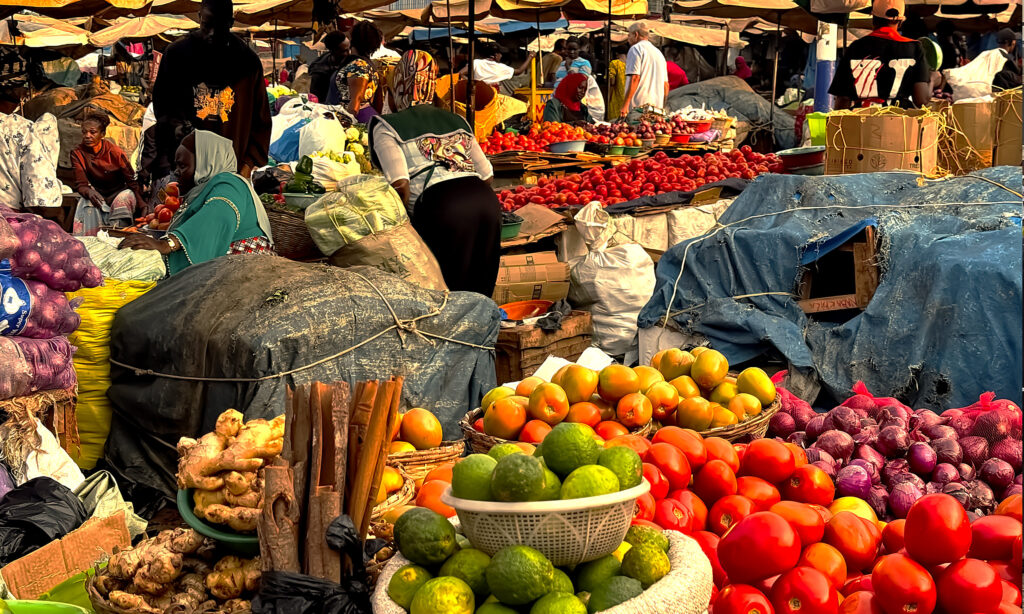
Here’s what to look out for
Pineapple – Enanansi
Best Season: May – August
3,000–5,000 UGX each
depending on size and ripeness
Ugandan pineapples are some of the sweetest in the world—nothing like what you know from abroad. Those from Luweero are especially prized for their honey-like flavor and low acidity.
Choose one with golden skin, a rich scent at the base, and firm leaves. Don’t worry about a few dark spots—they often mean the fruit is ripe. Ask: “Enanansi za Luweero?”
Mango – Muyembe
Best Season: NovEMBER – March
2,000–3,000 UGX each
depending on size and ripeness
During mango season, the markets are overflowing. Look for fruits with a deep orange-red skin, a sweet smell at the stem, and slight softness when pressed. Too soft means overripe. Avoid black marks or large soft spots.
Ask: “Muyembe gwa ssawa eno?” (Is this mango in season?). And make sure it’s Ugandan mangos – out of season you’ll find Kenyan ones – and they really don’t taste the same…
Avocado – Ovakedo
Best Season: March – May & September – November
500–1,000 UGX each
depending on size and ripeness
Ugandan avocados are buttery and rich. Pick one that’s slightly soft when squeezed—not hard, not mushy. Skin can be green or black, depending on type. Avoid dents or broken skin.
They ripen fast, so buy only what you’ll eat soon.
Passion Fruit – Obutunda
Best Season: All year round
2,000–3,000 UGX
for a small basket
Look out for the Passion Fruit from Masaka – they are the best.
These little fruits may look smaller and duller than what you’d expect, with a hard, wrinkly purple or green skin, but they pack a punch.
Good ones feel heavy for their size and have deeply wrinkled skin—the more wrinkled, the riper. A slight give means juicy pulp inside. Avoid overly light ones (dry) or cracked skins (overripe). Ask: “Obutunda bwa Masaka?”
They’re light and travel well, so they’re good to take home with you
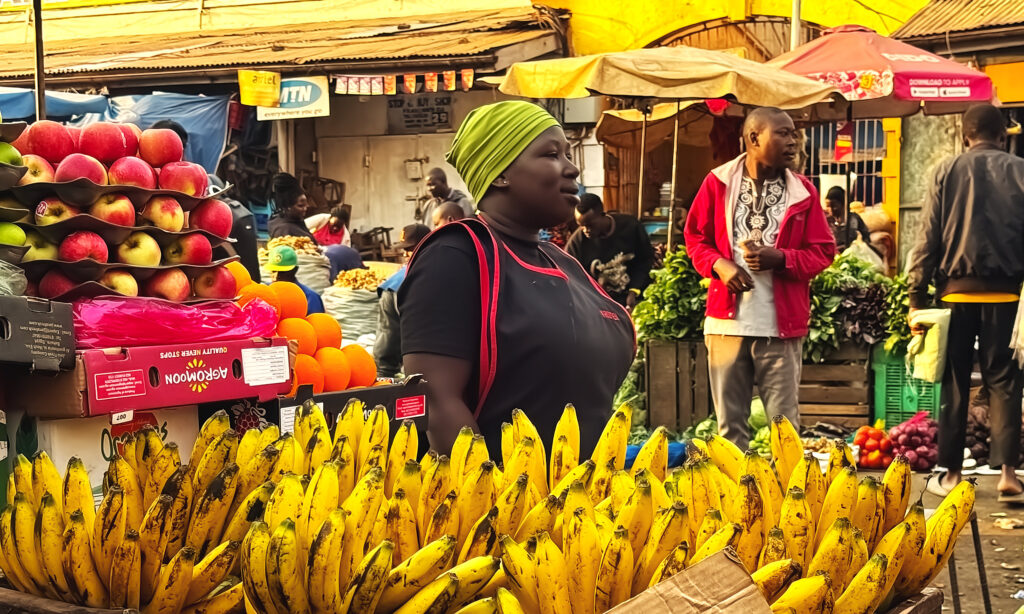
Small Sweet Bananas – Ndiizi
Best Season: All year round
1,000–2,000 UGX
for a small bunch
Tiny, deeply sweet, and full of flavor—these local bananas are Uganda’s candy.
They’re best when the peel is yellow with small black dots and the fruit gives slightly when pressed. Too hard means unripe; too soft means mushy.
Ask for “Elyenvu Ndiizi.”
Jackfruit – Fene
Best Season: All year round
1,000–2,000 UGX
for a generous portion
Jackfruit is massive and fragrant, with sweet yellow pods inside that taste like pineapple and bubblegum. At the market, it’s usually sold already cut and cleaned.
Look for pods that are golden yellow and not too dry or sticky.
Papaya – Pappali
Best Season: All year round, best after rain
2,000–4,000 UGX
depending on size
Ugandan papayas are large, smooth, and very sweet. A ripe one will have a yellow-orange hue and give slightly under pressure.
Avoid ones that are all green (unripe) or too soft and spotted (overripe).
Tea Spices – Ebilungo Bya Chai
2,000–5,000 UGX
for a small pack
For a real Ugandan tea experience, look for blends of cardamom, cinnamon, clove, black pepper, and ginger. Sold loose or in mixed bundles.
Take a sniff—fragrance is the best guide.
Cinnamon Bark – Mudalasini
2,000–5,000 UGX
for a small piece
Cinnamon is sold in bark strips. Look for tight curls and a dry, woody texture. It should snap cleanly, not bend. The smell should be warm and sweet. Avoid moldy or soft pieces.
Perfect for tea or as a souvenir.
Cardamom – Elikadiya
Best Season: October – February
2,000–4,000 UGX
for a small packet
Green cardamom pods are popular for spiced tea and sweets. Vendors may offer black cardamom too, which is smokier.
Choose plump, green pods with a strong scent. Pale or dried-out pods are weak in flavor.
How to Get the Best Fruit
Go Early
Arrive between 6:30–8:30 AM for the freshest picks. Vendors are still arranging their produce, and competition from restaurants hasn’t scooped up the best stuff yet.
Dress light
Wear comfortable shoes; the ground can be uneven or wet. Sun hat and light layers help.
Play it safe
Keep valuables close; the market is busy. A small cloth bag inside a backpack helps carry purchases discreetly.
Prepare your money
Small UGX notes under 5,000 are useful for precise change, 1,000–2,000 UGX notes are best. Have extra handy just in case.
Ask Questions
Don’t be shy! Vendors are friendly. Most vendors speak Luganda, but English works fine. Ask where the fruit comes from or if it’s ripe to eat today. Often they’ll give you a small taste before you buy.
Negotiate Kindly
Prices aren’t fixed—especially for foreigners. Start with a smile and ask:
“Eka ssente mmeka?” (How much is this?)
If the price seems high, offer a lower one with a smile. Don’t haggle too hard—a few thousand shillings more is only cents to you, but helps support a family.
Don’t Buy Too Much
It’s easy to get carried away, and you get a lot of amazing fruit for very little money. But most fruits ripen quickly in Kampala’s warmth: buy only what you can eat in a day or two.
Wash the fruit before you eat them
Even if it looks clean, better be safe then sorry. A quick wash with safe water helps remove dirt, bacteria, and any pesticide residues — especially important if you’re not used to the local environment.
If you want to experience Kampala like a local and bite into some of the juiciest, most flavorful fruit you’ll ever eat—make your way to Nakasero Market. Skip the hotel buffet, and walk the aisles of Uganda’s oldest market with your senses wide open.
Nakasero Market, Kampala
Nakasero Market, Kampala- Uniquely Ugandan3/5A deep dive into Kampala’s daily life – vivid, local, and full of character.
- Experience4/5Vibrant and engaging. Watch your step and enjoy the sensory overload.
- Service & Hospitality4/5Sellers are friendly but bargaining is part of the game. Bring patience and smiles.
- Atmosphere & Setting3/5Colorful, busy, sometimes chaotic — but rich with life.
- Location & Accessibility5/5Centrally located, but traffic and parking can be tricky. Walk if possible.
- Authenticity5/5Absolutely authentic, nothing staged.
- Cleanliness & Hygiene2/5Rough floors, strong smells — come for the fruit, not for the shine.
- Memorability4/5You’ll tell stories about this market. Bring your camera and your curiosity.
- Value for Money5/5Some of the best fruit in Uganda at unbeatable prices.





Leave a Reply