
heartbeat of uganda
From Nile’s Source to Mountain Peaks
Discover Uganda’s Natural Wonders
Explore Uganda’s dramatic landscapes, from the source of the Nile to the sky-piercing Rwenzori Mountains and the serene lakes dotted with islands. Each place invites discovery, adventure, and moments of awe in nature’s untouched beauty.
Standing where the world’s longest river takes its first breath, watching mist rise from waterfalls that have carved their way through volcanic rock for millennia, or floating between islands on Africa’s deepest lake – Uganda doesn’t just show you nature, it invites you into landscapes that redefine what spectacular means.
Source of the Nile: Where Earth’s Greatest River Takes Its First Breath
The moment you arrive in Jinja, you feel it. There’s an energy here that has nothing to do with the town’s bustling streets or the adrenaline junkies preparing for white-water rafting. It’s older, deeper – the kind of force that has drawn explorers, dreamers, and wanderers for centuries to this unassuming spot where Lake Victoria narrows and becomes something legendary.
John Hanning Speke stood here in 1862, convinced he’d solved one of geography’s greatest mysteries. Local Baganda people had known for generations that this was where the great river began its journey to distant lands. Today, you can step into that same current of history, literally and figuratively.
The boat that takes you to the exact source point cuts through waters that will touch the shores of ten countries before reaching the Mediterranean. Your captain knows these currents like old friends, navigating between rocky outcrops where cormorants spread their wings to dry and where the occasional Nile crocodile still basks despite the increasing human activity.
But it’s the birds that steal the show. African fish eagles circle overhead with their distinctive white heads catching the morning light. Malachite kingfishers flash electric blue as they dive for breakfast. Herons stand motionless in the shallows, masters of patience that make even the most seasoned birdwatcher hold their breath. The symphony of calls creates a soundtrack that connects this moment to countless mornings when only wildlife witnessed the Nile’s birth.
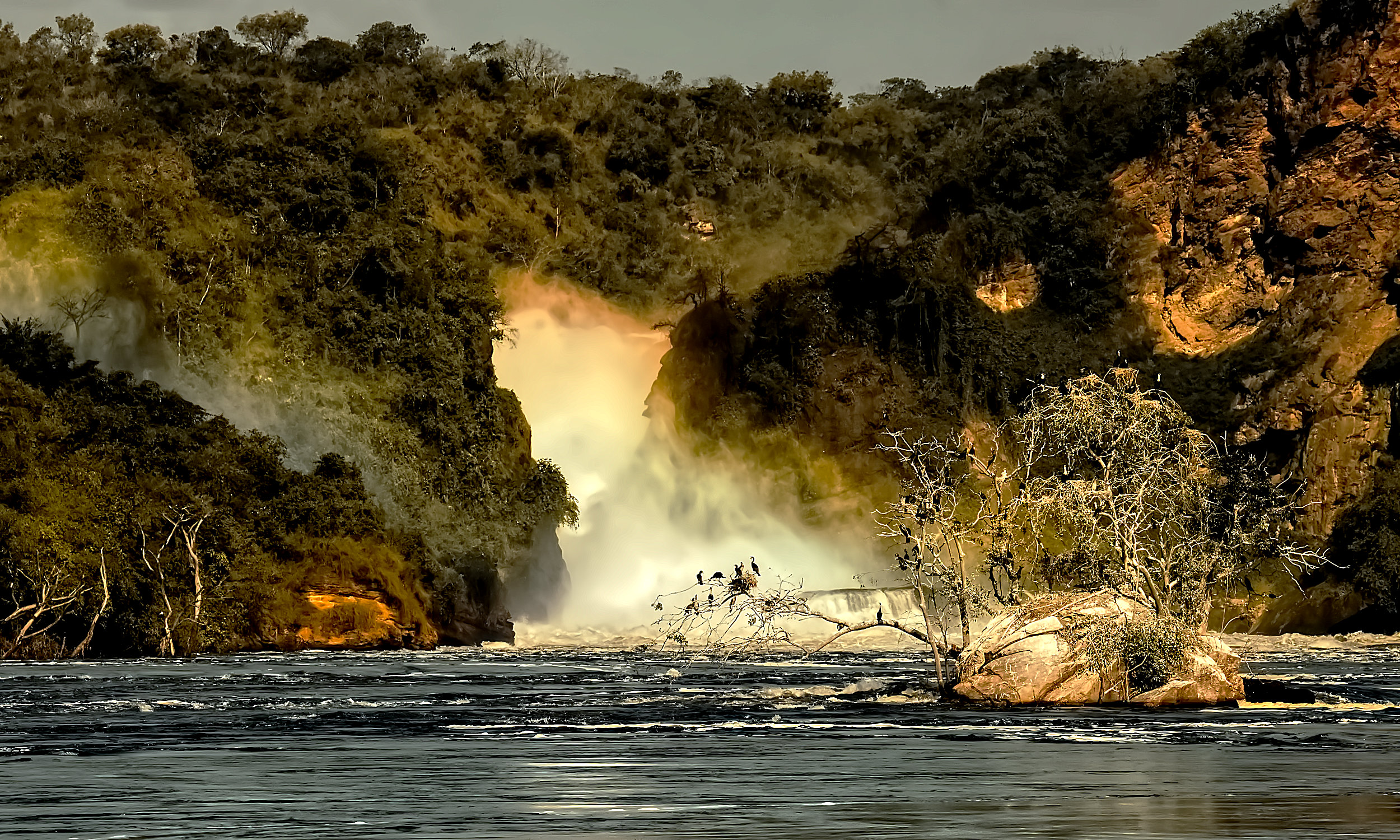
Your guide points out the exact spot where the current begins – a deceptively calm-looking stretch of water that belies the power of what’s about to unfold downstream. The geography lesson becomes visceral when you realize the water flowing past your boat will soon thunder over Murchison Falls, wind through the deserts of Sudan, and eventually irrigate the fields of Egypt before flowing freely into the Mediterranean Sea.
Rwenzori Mountains: The Mountains of the Moon Beckon
The “Mountains of the Moon” don’t appear gradually on the horizon: they materialize from mist and cloud like something conjured from African folklore. These peaks have their own weather systems, their own moods, their own way of humbling even experienced mountaineers who think they understand what high altitude means.
Ptolemy wrote about these mountains in 150 AD, calling them the source of the Nile. He wasn’t wrong about their importance, just their hydrology. The Rwenzoris create their own reality, where equatorial glaciers cling to peaks over 5,000 meters high, where plants grow to impossible sizes, and where every day brings weather that can shift from tropical warmth to near-freezing conditions.
The trek begins innocuously enough through montane forests where blue monkeys watch your progress with curious eyes. Colobus monkeys crash through the canopy above, their black and white fur a stark contrast to the green cathedral of ancient trees. The path is soft underfoot, cushioned by decades of fallen leaves and the kind of humidity that makes every breath feel rich and thick.
Then you enter the bamboo zone, and the mountains show their first hint of the otherworldly experiences ahead. Bamboo poles creak and groan in the wind, creating an orchestra of hollow notes that follows you up the increasingly steep trail. Visibility drops as clouds roll in from nowhere, transforming familiar landmarks into ghostly shapes that appear and vanish like memories.
Above the bamboo, the real magic begins. Giant heathers twist into sculptures that Dalí would envy, their bark draped in moss and their branches reaching toward peaks still hidden in cloud. This is the afro-alpine zone, where normal rules about plant size and shape cease to apply. Groundsels grow tall as trees, their thick trunks and cabbage-like leaves creating a landscape that belongs more on an alien planet than in East Africa.
The higher you climb, the more the mountains reveal their true character. Weather changes happen in minutes, not hours. Sunshine gives way to hail, which melts into fog, which clears to reveal vistas that stretch to the Congo Basin. At night, temperatures plummet while stars shine with the intensity only possible at high altitude in the tropics.
Porters become your mountain family, sharing stories around fires that seem impossibly warm in the thin air. They’ve carried loads up these trails thousands of times, yet still pause at viewpoints to appreciate views that never get old. Their easy laughter at altitudes where lowlanders struggle to breathe reminds you that mountains choose their own people.
Sipi Falls on Mount Elgon: Where Water Dances and Volcanoes Dream
Three waterfalls cascade down Mount Elgon’s slopes like nature’s own staircase, each one distinct in character but united in their ability to make visitors stop mid-conversation and simply stare. The main fall drops 100 meters in a single plunge that creates its own weather system: mist that rises and swirls, catching light in ways that photographers spend hours trying to capture.
The sound reaches you first. A rumble that starts subtle and builds until it drowns out conversation, thought, everything except the raw power of water meeting rock after an impossible journey through volcanic slopes. Then you round the corner and see it – white water against black rock, mist against sky, power against ancient stone.
But Sipi Falls is more than just waterfalls. The entire landscape tells the story of what happens when volcanic soil meets high altitude meets tropical rainfall. Coffee plantations terrace the slopes in patterns so perfect they look designed by someone with an artist’s eye for proportion. These aren’t just any coffee plants – the volcanic soil and altitude create growing conditions that produce beans considered among the world’s finest.
Local farmers here are artists in their own right, coaxing arabica coffee from mountainside plots their families have tended for generations. You can taste the terroir in every cup: minerals from volcanic soil, sweetness from high-altitude growing, complexity from traditional processing methods that haven’t changed because they don’t need to.
Mount Elgon itself looms over everything, its massive caldera large enough to hold entire cities. This ancient volcano has been dormant for millions of years, but its influence shapes everything from soil composition to rainfall patterns to the caves where elephants still come to mine salt from mineral-rich rocks.
The hiking here caters to every level of adventure seeker. Gentle walks lead to viewpoints where all three falls appear in perfect composition. More challenging routes take you behind the cascading water for a perspective that few humans ever experience – looking out at the world through a curtain of falling water while feeling the spray on your skin and the vibration of millions of gallons in your bones.
Lake Bunyonyi: The Islands of Dreams in Africa’s Deepest Waters
Africa’s deepest lake spreads between terraced hills like a mirror reflecting the kind of scenery that belongs on postcards, except no photograph captures the complete experience of being here. Twenty-nine islands dot the surface, each one a world unto itself, each one connected to stories that stretch back centuries through oral traditions that make every boat ride a history lesson.
The lake’s name translates to “place of many little birds,” and within minutes of arrival you understand why. Over 200 species call this ecosystem home, from the diminutive sunbirds that hover like hummingbirds among flowering bushes to the regal grey crowned cranes that stalk through marsh grasses with the dignity of ancient royalty.
Dugout canoes carved from single trees provide the traditional way to explore the islands, and your paddler is never just transportation. These are storytellers, historians, and cultural ambassadors who’ve inherited knowledge passed down through generations of lake dwellers. They know which islands were used as punishment sites, which ones hosted traditional ceremonies, and which ones still maintain communities that live much as their ancestors did.
The water itself is a revelation. Crystal clear, bilharzia-free, and crocodile-free, Lake Bunyonyi offers the rare African experience of swimming in natural waters without concern for health or safety. The temperature stays refreshingly cool year-round, fed by mountain streams that filter through volcanic soil before reaching the lake.
Each island reveals its own character. Some host communities that welcome visitors to experience traditional life: farming techniques unchanged for centuries, crafts made with materials gathered from the surrounding hills, and evening gatherings where stories and songs connect past and present. Others remain wild, covered in forest where birds nest undisturbed and where the only sounds are wind through leaves and water lapping at rocky shores.
Find The Amazing Beauty of Uganda’s Hidden Treasures
Beyond the famous national parks lie natural wonders that showcase the incredible diversity of landscapes packed into this relatively small East African nation.
Mabira Forest – Central Uganda’s largest surviving natural forest creates a green lung just hours from Kampala, where 315 bird species and forest elephants thrive among mahogany trees that have stood for centuries.
Ssese Islands – Eighty-four islands scattered across Lake Victoria’s northwestern waters, each offering pristine beaches, fishing communities, and forests where vervet monkeys play in trees that grow almost to the water’s edge.
Amabere Ga Nyina Mwiru Caves – Limestone formations near Fort Portal weave together geology and mythology, where stalactites and stalagmites create cathedral-like chambers that local Batooro people consider sacred to their creation stories.
Ssezibwa Falls – Twin waterfalls along the Kampala-Jinja highway hold deep spiritual significance for the Baganda people, who still conduct traditional ceremonies at this site where the river splits around a rocky island.
Kigezi Highlands – Terraced hills rolling toward Rwanda and Congo create landscapes so perfectly sculpted they’ve earned the nickname “Switzerland of Africa,” where every valley reveals new patterns of human harmony with steep topography.
Nyero Rock Paintings – Ancient art galleries painted on granite outcrops near Kumi tell stories of hunting scenes and geometric patterns created by people whose names are lost to time but whose artistic vision still speaks across millennia.
Mpanga Forest Reserve – A biodiversity hotspot near Mpigi where birders can spot over 200 species in a single day, from great blue turacos that crash through the canopy to tiny weavers that construct elaborate hanging nests.
Budongo Forest Reserve – Mahogany trees that tower above everything else create a cathedral atmosphere perfect for chimpanzee encounters, where our closest relatives swing through branches thick enough to support small cars.
Maramagambo Forest – Equatorial forest where bat caves echo with the calls of thousands of residents, and where forest elephants still create trails through vegetation so thick that humans can walk within meters of these giants without seeing them.
Kalinzu Forest Reserve – Rolling forest canopy punctuated by clearings where chimpanzees feed, offering some of the most intimate primate encounters available outside Kibale’s more famous corridors.
Zika Forest – A patch of forest near Entebbe that made scientific history as the site where researchers first identified the Zika virus, now a peaceful research station where yellow fever studies continue.
Nakivubo Wetland – Urban wetland in the heart of Kampala that filters the city’s water while providing habitat for hundreds of bird species, proving that nature finds ways to thrive even in unexpected places.
Lugogo Swamp – Papyrus swamps that once covered much of central Uganda, now a protected remnant where sitatunga antelope wade through water gardens and where shoebill storks hunt for lungfish.
Uganda’s natural wonders don’t fit into neat categories or convenient marketing slogans. They exist on their own terms, in their own time, following patterns established over millions of years of geological upheaval, volcanic activity, and the patient work of water carving landscapes from ancient rock. This is a country where every ecosystem tells part of a larger story about how nature creates beauty from chaos, how life finds ways to flourish in the most unlikely circumstances, and how human cultures develop in harmony with landscapes that demand both respect and adaptation.
From glaciated peaks that scrape the sky to islands floating on deep water, from rivers that begin epic continental journeys to forests that have survived since before humans walked upright, Uganda offers natural experiences that expand your understanding of what this planet can create when given enough time and the right conditions.