

From the Railroads to the Kitchen Stove
To understand chai in Uganda, you have to follow the railway lines.
In the early 1900s, British colonists brought thousands of Indian laborers to East Africa to build the railway from the coast of Mombasa into the heart of Uganda. Along with metal tools and sweat-stained work shirts came something less visible but just as enduring: spice blends, strong tea leaves, and a habit of boiling them together into a milky brew that calmed the stomach and filled long afternoons.
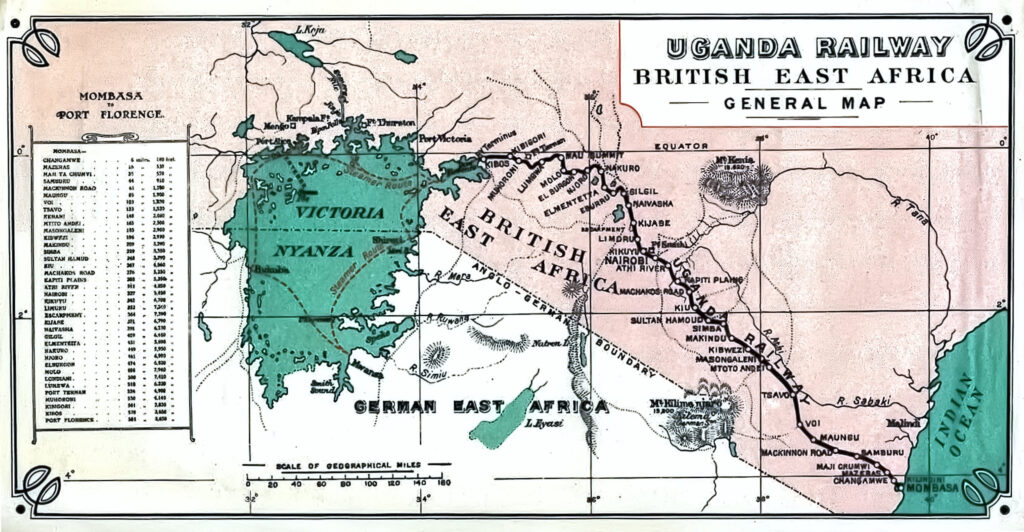
That version of Indian masala chai didn’t stay on the railway. It followed workers into Kampala, Jinja, and Mbale. It found its way into shopfronts, homesteads, and roadside stalls. And over time, Ugandans began adding their own signature: more ginger, less fuss, milk from the neighbor’s cow instead of condensed tins. Tea leaves from western Uganda when available. Sugar? Always generous.
By the time the railway rusted, the tea stayed.
The Ugandan Way
While the Indian roots of chai are easy to trace, the Ugandan version tells a different story.
Here, the tea is thicker. Milk stretches further than water. Spices lean heavier on fresh ginger—cut rough, not grated, and dropped in early to draw out the heat. Cardamom pods are crushed with the back of a knife, cloves tossed in whole. Some add lemongrass if there’s a stalk in the garden. Others throw in black pepper, just a few grains, for a slow burn.
The tea itself comes in big sacks. Most prefer strong-cut black leaves—CTC, the kind that brews fast and deep. In markets, you can still find tea grown in Uganda’s west, and also on most supermarket shelves you find traditional Ugandan teas like Garden Tea, Maganjjo Tea, Mukwano Tea and many more.
Sugar isn’t debated. If it’s not sweet, it’s not done.
It’s a warm welcome into your Ugandan story
You’ll find African milk tea just about everywhere across Uganda—from roadside cafés to hotel buffets, family kitchens to safari lodges. It’s the default drink to order with breakfast, often arriving steaming in a tin pot or tall thermos. And while the recipe sounds simple—black tea, milk, sugar, spices—each place gives it its own signature.
Sometimes it’s heavy on ginger, sometimes clove-forward, occasionally with just the faintest hint of cardamom. One day it’s sweet and creamy, the next it’s more punchy and peppery. That’s the charm.
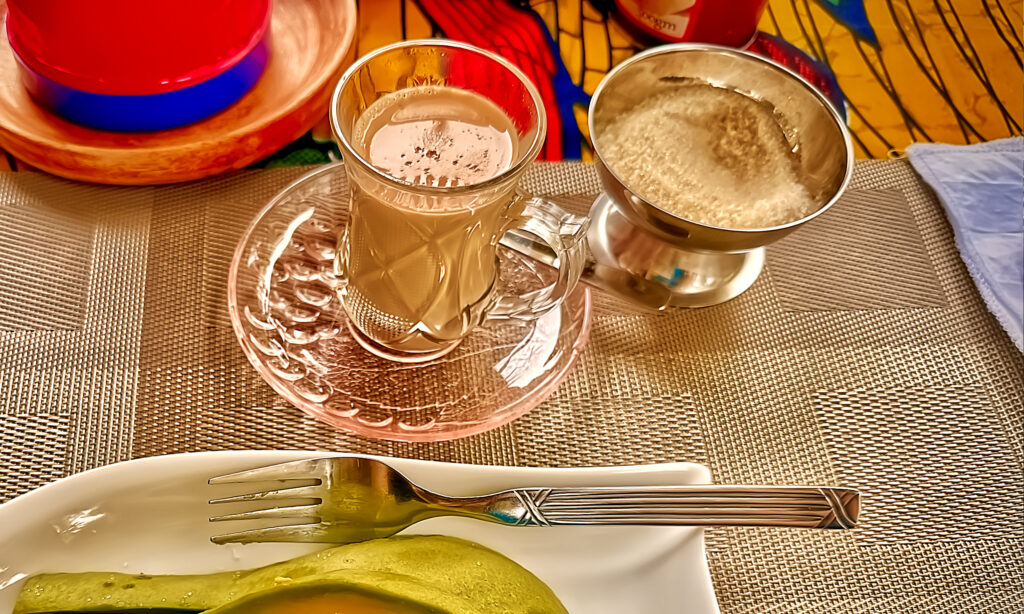
You never quite know what version you’re getting, but it’s almost always comforting and good. Locals drink it as a morning pick-me-up, but also in the afternoon chatting on verandas or pausing on long bus journeys.
How to Make Chai Like in Uganda
No machines. No thermometers. Just a pot, a fire, and your nose to tell you when it’s ready.
Ugandan Spiced Milk Tea (for 2 big mugs)
What you’ll need:
- 250 ml water
- 500 ml whole milk
- 2 heaped teaspoons black tea leaves (or 2 strong tea bags)
- 1 thumb-sized piece of fresh ginger, sliced
- 4 cardamom pods, crushed
- 3 cloves
- 1 small stick of cinnamon
- 2–3 teaspoons sugar (adjust as you go)
Optional
a stalk of lemongrass, 2–3 black peppercorns
Step by step
- Add water, ginger, and all spices to a saucepan. Bring to a boil and let it roll gently for 7–10 minutes.
- Stir in the tea and simmer another 2 minutes.
- Pour in milk. Let it foam up once, stir, and turn the heat low.
- Add sugar, stir again, and taste. Adjust.
- Strain into mugs and drink hot.
Note
Some let it sit a minute before pouring, to let the flavors settle. Others pour it twice between mugs to aerate it. There’s no wrong way.
A Souvenir Worth Packing
Tasting spiced milk tea in Uganda is an experience of its own, but it doesn’t have to end with your trip. Pack some spices, maybe a tin of ready-made mix,(Tea Masala) and try making your own version wherever you live.
Spices are easy to find in Uganda. Nakasero Market in Kampala has bundles of cinnamon bark, sacks of cloves, loose ginger roots, and cardamom sold by the spoonful. You’ll spot the vendors under umbrellas, their hands stained yellow from turmeric, the air thick with scent.
Stock up here before heading home. A handful of cinnamon and a paper bag of cloves costs less than a coffee in Europe.
If you’re after convenience, supermarkets offer pre-mixed chai masala blends—powdered spices ready to stir into your tea. Brands like Tropical Heat or Shaan are common. They’re light, pack easy, and make excellent gifts.
Nothing says “I’ve been to East Africa” quite like the smell of cardamom rising from your stove back home. And it will bring with you good memories of your adventures in Uganda.
Nothing says “I’ve been to East Africa” quite like the smell of cardamom rising from your stove back home. And it will quickly bring back some good memories of your adventures in Uganda.



Leave a Reply